My AI-Assisted Research
My principles for AI-assisted research, responsible innovation, and the evolving role of researchers in an AI-enabled world.
Augmentation First
Research begins with human curiosity, context, and interpretation. I use AI to broaden early-stage exploration, organize information, and generate alternative framings. Sources, interpretations, and final decisions remain human-verified and owned.
How this shows up in my work:

Research planning and brainstorming





Consolidation and information organization



Critique and challenge exercises
Extended Reflexivity
With AI introducing its own assumptions and biases into the research process, reflexivity must extend beyond the researcher. I use AI to generate counter-interpretations and surface assumptions that I might otherwise overlook. I compare outputs across models to identify unstable interpretations and model-dependent assumptions, without treating agreement as evidence of validity. I verify AI-assisted interpretations against source material and raw evidence; AI can challenge an interpretation, but it does not independently validate a finding.
How this shows up in my work:
AI-assisted reflexivity
Assumption checks
Counter-framing to surface bias

Deliberate Guardrails
AI supports exploration, organization, counter-framing, and critique; research design, participant interpretation, synthesis, and final decisions remain human-owned. I treat Responsible AI as an ongoing practice. As technology evolves, guardrails help preserve rigor, accountability, and human agency.
How this shows up in my work:
Advocacy for appropriate AI use
Alternative framing generation
AI readiness and adoption work
Research governance discussions
Cross-model comparison

Responsible AI guidelines development
AI continues to reshape both the products we build and the way research is practiced. My goal is to evolve my research practice thoughtfully.
How I Work
I use attention as leverage at every stage of work.
Asking questions about the entire work context- what decision will it inform? What risks must it reduce?
Purposeful Positioning
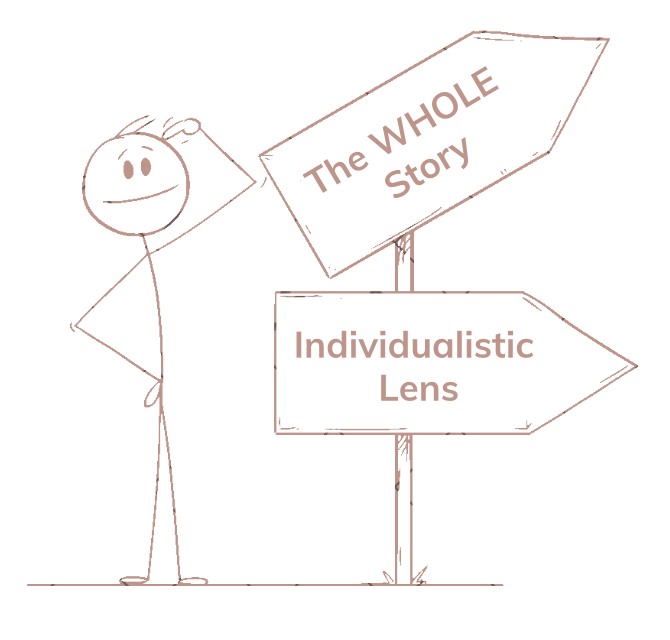
From behavioral nuance to larger ecosystems- insight lies where small interaction patterns reflect larger systemic forces.
Leveraging Layers
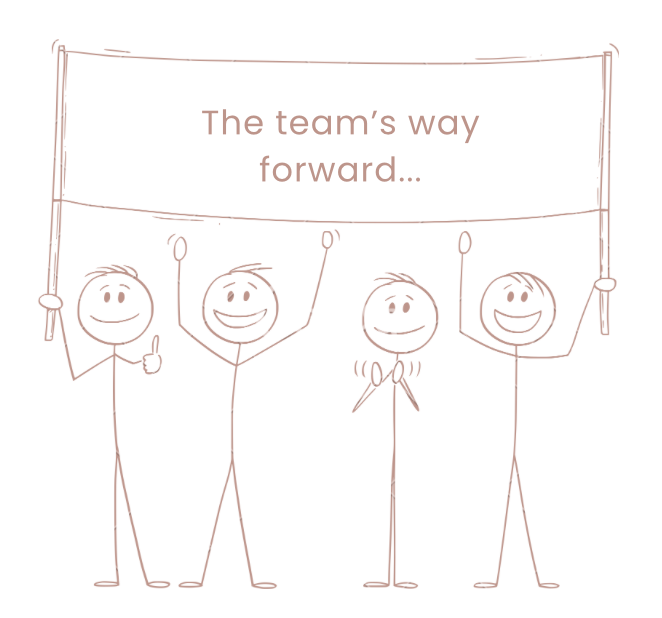
Making tradeoffs explicit so teams move with clarity on what they are choosing, and not choosing, to build.
Tension and Tradeoffs
Research is a connective discipline. I partner closely with Product, Design, and Engineering from the outset to align on the decision to be made, define success criteria together, and agree on how evidence will inform direction. Accountability for decisions is shared, not delegated to research.
When there is pushback or competing priorities, I surface tradeoffs explicitly, especially for high stakes, highly ambiguous decisions that are difficult to reverse:
Decision: What are we actually trying to shape using the research?
Risk: What happens if we’re wrong?
Evidence: What signals support certain directions?
For me, this is the power of research- the decisions it enables and the futures it shapes.